Study technique gets most of the attention, but a student who sleeps badly, never moves and is close to burnout will get less out of any technique. The research on these habits is uneven. Sleep has strong evidence for memory. Exercise has a small, real effect. Most of the rest is weaker than the internet suggests. This post sorts the habits by how much evidence stands behind them, and keeps only claims you can check in the references.
What the evidence supports
- Regular, sufficient sleep (Strong for memory; correlational for grades): Consolidates what you learned and helps you encode the next session
- Aerobic exercise (Small but consistent): Small boost to cognition after a session; long-term benefits seen mainly in older adults
- Short breaks (Moderate): Less fatigue and more energy; smaller effect on performance
- Mindfulness and worry-writing (Small trials): Fewer wandering thoughts; less test anxiety
- Specific foods and supplements (Little study-specific evidence): Not covered here
Sleep: the habit with the strongest evidence
Sleep is not downtime for memory. Reviews of the research describe sleep as an active period in which newly learned material is reactivated and stabilised, which is why it is called consolidation (Diekelmann & Born, 2010).
The reverse also matters. In an imaging study, Yoo and colleagues kept one group awake for a night before a memorisation task. The sleep-deprived group had reduced hippocampal activity while encoding, and remembered less, even after a night of recovery sleep (Yoo et al., 2007). Sleep loss hurts the ability to take in new material, not only to hold old material.
For grades, the best-known data is observational. Okano and colleagues gave wearable trackers to 100 students in an introductory chemistry class (88 completed the study). Sleep duration, quality and consistency together accounted for about 24% of the variance in overall grades. Sleep over the month and week before a test was linked to performance, while sleep the night before an exam was not (Okano et al., 2019). It is a correlation, not proof of cause, but it points at a practical lesson: one good night before the exam cannot make up for weeks of short sleep.
How much? US consensus statements recommend at least 7 hours for adults (Watson et al., 2015) and 8 to 10 hours for teenagers (Paruthi et al., 2016).
What to do with this:
- Keep bedtime and wake time within about an hour of each other, weekends included. Consistency was one of the three measures in the Okano data.
- Do your most demanding review earlier in the day, and put a short retrieval session shortly before bed instead of a late cram.
- Treat an all-nighter as a loss, not a trade. The Yoo result is about exactly that night.
Exercise: a small boost now, a bigger bet later
A meta-analysis of 79 studies found that a single bout of exercise has a small positive effect on cognitive performance. How large depends on how long and how hard the session was, which cognitive task you test and how fit the person is (Chang et al., 2012). A small effect is still useful, but it is not a replacement for studying.
Over longer periods, the clearest result is in older adults. In a randomised trial of 120 older adults, a year of moderate walking increased hippocampal volume by about 2% and improved spatial memory, while a stretching control group's volume declined (Erickson et al., 2011). That does not show the same effect in students, so treat it as a reason to keep the habit, not as a study hack.
What to do with this:
- A brisk walk or a short run between study blocks is a reasonable use of a break.
- Do not trade study time for exercise expecting a memory payoff. Do it because it is good for you and costs little.
Focus: a quiet mind and breaks
A quiet mind
Mind wandering is a measurable drag on reading comprehension. In a randomised study of 48 undergraduates, a short mindfulness class improved scores on reading-comprehension questions taken from the GRE and on working memory, and reduced mind wandering, while a control class did not (Mrazek et al., 2013). The sample is small and the training was short, so read it as promising.
For test anxiety, Ramirez and Beilock had students write about their worries for about 10 minutes before an exam. High-anxiety students did better than those who did not (Ramirez & Beilock, 2011). It costs ten minutes and a sheet of paper.
Breaks
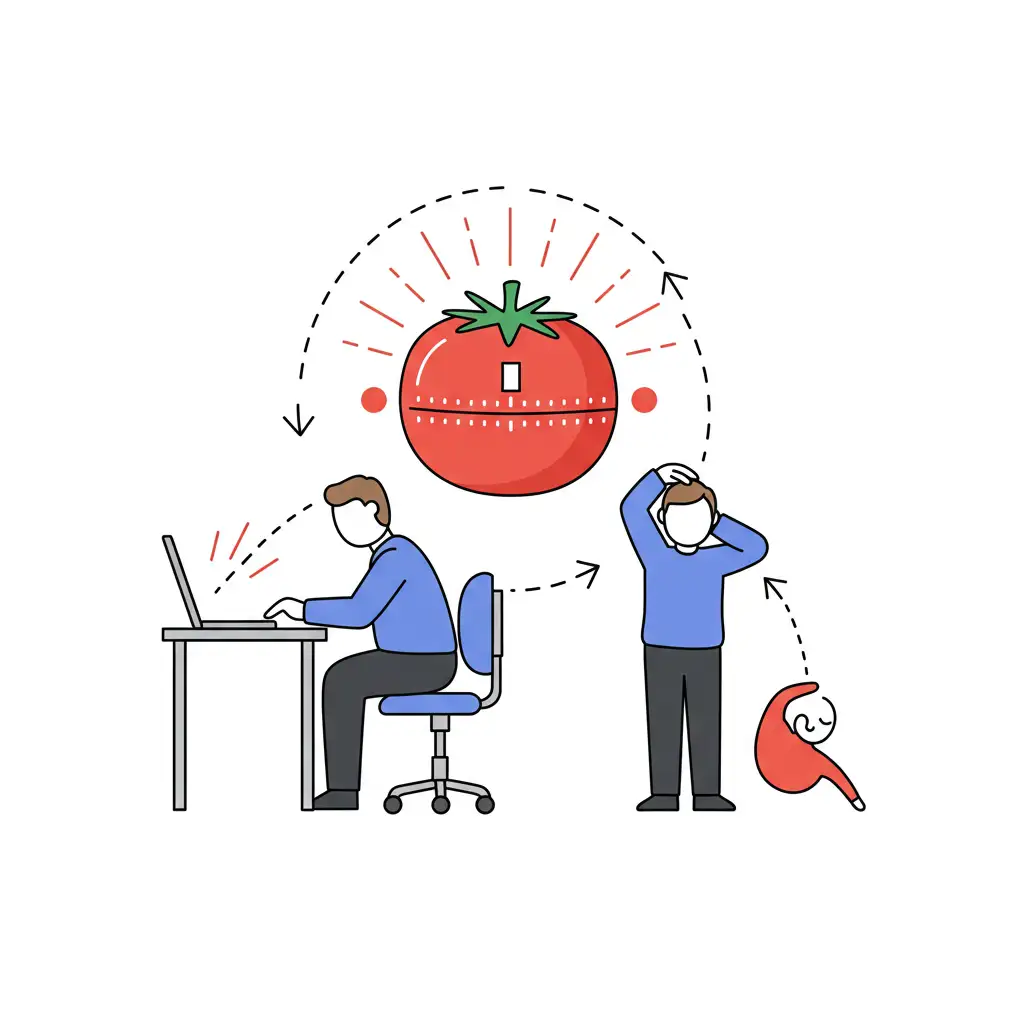
A meta-analysis of micro-break studies found that short breaks, up to about 10 minutes, increase vigour and reduce fatigue, with a smaller and less consistent effect on performance (Albulescu et al., 2022). That is the case for timed work blocks, which you can set up with the Pomodoro Technique.
Burnout: when habits stop being enough
Burnout is not the same as being tired. A meta-analysis of 29 studies and about 109,000 students found that burnout was negatively associated with academic achievement. The overall correlation was about -0.24, and the link was strongest for a reduced sense of efficacy (about -0.39) and weakest for exhaustion (about -0.15) (Madigan & Curran, 2021). These are correlations, so burnout could be a result of poor grades as much as a cause.
The practical reading is that a falling sense of "I can do this" matters as much as being tired. Early signs worth acting on:
- You are tired even after sleeping and a day off.
- You study but feel nothing about the subject.
- You doubt you can pass even when your practice results say otherwise.
Responses with the best support are the unglamorous ones: protect sleep, cut the number of commitments you hold at once, and track real practice results so your sense of progress rests on something other than a feeling. If it persists for weeks, talk to a doctor or your university's counselling service. A blog post is not a substitute.
What about food?
Study-specific evidence for particular foods, supplements and diets is thin. The sensible baseline is regular meals, enough water and caffeine that does not interfere with sleep. Anything promising a memory boost from a single food deserves doubt.
A simple weekly plan
- Fix wake-up and bedtime within an hour, seven days a week.
- Study in blocks of 25 to 50 minutes with a 5 to 10 minute break, and spend some of those breaks walking.
- Exercise 2 to 3 times a week at a level you will keep up.
- Write down worries for ten minutes before a test or a hard session.
- Check your practice scores weekly. If both they and your motivation keep falling, change the plan before adding more hours.
Then spend that protected time on techniques with stronger evidence: try the questions first, then mix your practice.
FAQ
How many hours of sleep do students need?
At least 7 hours for adults and 8 to 10 for teenagers, according to US consensus statements. Consistency matters as well as length.
Is an all-nighter ever worth it?
The evidence says it costs you. In the Yoo study, a night without sleep before learning reduced hippocampal activity and recall, even after a recovery night.
Does exercise improve memory?
A single session has a small positive effect on cognition. Longer-term benefits to the hippocampus have been shown in older adults, not yet clearly in students.
Are breaks worth the time?
Yes. Short breaks reduce fatigue and increase energy, and the effect on performance is smaller but positive.
How do I know if I am burned out?
Persistent exhaustion, detachment from the subject and doubt about your ability, lasting weeks. If that is you, speak to a professional.
The Takeaway
Sleep is the habit with the strongest evidence, so protect it first. Exercise and breaks come next, with smaller effects. Mindfulness is worth testing on yourself, and burnout is a reason to change the plan, not to push harder.
References
- Albulescu, P., Macsinga, I., Rusu, A., Sulea, C., Bodnaru, A., & Tulbure, B. T. (2022). "Give me a break!" A systematic review and meta-analysis on the efficacy of micro-breaks for increasing well-being and performance. PLoS ONE, 17(8), e0272460. https://doi.org/10.1371/journal.pone.0272460
- Chang, Y. K., Labban, J. D., Gapin, J. I., & Etnier, J. L. (2012). The effects of acute exercise on cognitive performance: A meta-analysis. Brain Research, 1453, 87–101. https://pubmed.ncbi.nlm.nih.gov/22480735/
- Diekelmann, S., & Born, J. (2010). The memory function of sleep. Nature Reviews Neuroscience, 11, 114–126. https://doi.org/10.1038/nrn2762
- Erickson, K. I., et al. (2011). Exercise training increases size of hippocampus and improves memory. PNAS, 108(7), 3017–3022. https://doi.org/10.1073/pnas.1015950108
- Madigan, D. J., & Curran, T. (2021). Does burnout affect academic achievement? A meta-analysis of over 100,000 students. Educational Psychology Review, 33, 387–405. https://doi.org/10.1007/s10648-020-09533-1
- Mrazek, M. D., Franklin, M. S., Phillips, D. T., Baird, B., & Schooler, J. W. (2013). Mindfulness training improves working memory capacity and GRE performance while reducing mind wandering. Psychological Science, 24(5), 776–781. https://doi.org/10.1177/0956797612459659
- Okano, K., Kaczmarzyk, J. R., Dave, N., Gabrieli, J. D. E., & Grossman, J. C. (2019). Sleep quality, duration, and consistency are associated with better academic performance in college students. npj Science of Learning, 4, 16. https://pmc.ncbi.nlm.nih.gov/articles/PMC6773696
- Paruthi, S., et al. (2016). Recommended amount of sleep for pediatric populations: A consensus statement of the American Academy of Sleep Medicine. Journal of Clinical Sleep Medicine, 12(6), 785–786. https://doi.org/10.5664/jcsm.5866
- Ramirez, G., & Beilock, S. L. (2011). Writing about testing worries boosts exam performance in the classroom. Science, 331(6014), 211–213. https://doi.org/10.1126/science.1199427
- Watson, N. F., et al. (2015). Recommended amount of sleep for a healthy adult: A joint consensus statement of the American Academy of Sleep Medicine and Sleep Research Society. Sleep, 38(6), 843–844. https://doi.org/10.5665/sleep.4716
- Yoo, S.-S., Hu, P. T., Gujar, N., Jolesz, F. A., & Walker, M. P. (2007). A deficit in the ability to form new human memories without sleep. Nature Neuroscience, 10(3), 385–392. https://pubmed.ncbi.nlm.nih.gov/17293859/