
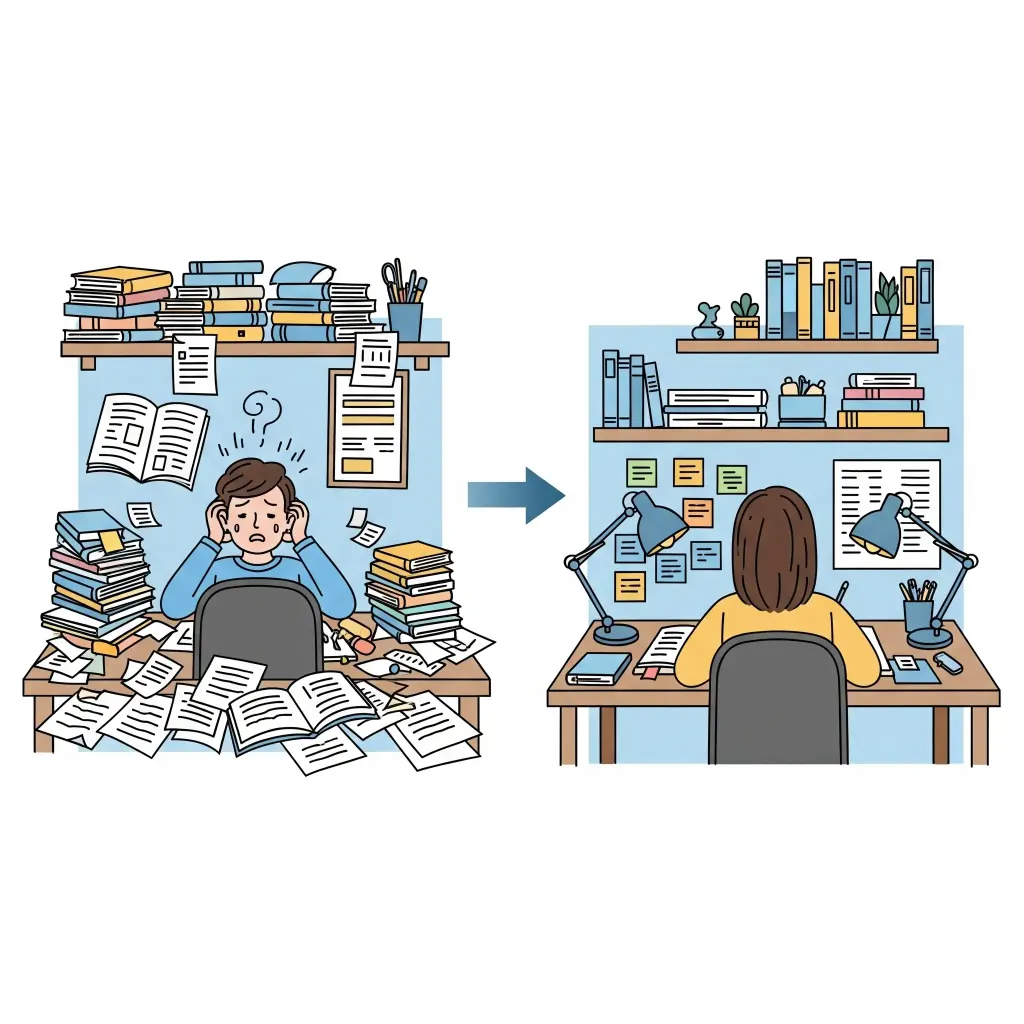
The environment in which you study plays a significant role in your ability to focus, process information, and retain what you learn. A cluttered and disorganized space can have a negative impact on your mental clarity, making it harder to concentrate and absorb new information. In contrast, a clean, organized study environment helps reduce distractions and promote mental clarity.
1. The Psychology of Clutter
Research has shown that physical clutter can contribute to mental clutter. When your surroundings are disorganized, it can overstimulate your brain, making it difficult to focus and process information effectively. This creates a cycle of distraction, where your brain is constantly trying to process everything in your environment, rather than concentrating on the task at hand.
On the other hand, a tidy space allows your mind to focus on one thing at a time. It reduces cognitive load, helping you concentrate better and retain more information.
2. How Clutter Affects Mental Clarity and Learning
- Increases Stress: Studies have shown that cluttered environments can increase cortisol levels, which can cause stress and anxiety. Stress, in turn, hinders your ability to concentrate and learn effectively.
- Decreases Focus: When there is too much visual input, your brain has to work harder to filter out irrelevant information, reducing your ability to focus.
- Reduces Productivity: A disorganized space can make it harder to find materials or study resources, leading to wasted time and frustration.
3. How to Organize Your Study Space for Maximum Mental Clarity
1. Declutter Regularly
Start by clearing away any unnecessary items from your study space. Remove old papers, unused study materials, and anything that doesn't serve a purpose. Keeping your study area clean and organized will reduce distractions and allow you to focus on the task at hand.
2. Create Defined Zones
Set up specific areas for different tasks. For example, designate a space for reading, another for writing, and one for brainstorming or group study. This can help your brain associate certain tasks with specific locations, improving focus.
3. Optimize Your Desk Setup
Keep only the essential items on your desk. A minimalist approach works best. Have your books, notebooks, and computer ready to go, but minimize the clutter around you. Consider using storage solutions like drawer organizers or shelves to keep things tidy.
4. Manage Digital Clutter
Don't forget about digital clutter! Organize your computer files and keep your desktop clean. Unsubscribe from unnecessary email lists, and limit the number of tabs open while studying to avoid distractions.
5. Incorporate Organizational Tools
Use tools like calendars, planners, or digital task managers to stay organized and on top of your schedule. Knowing exactly what you need to focus on at any given moment can enhance your productivity and mental clarity.
4. Final Thoughts
A clutter-free study space isn't just about aesthetics—it has a direct impact on your mental clarity, focus, and ability to learn. By organizing your environment and reducing distractions, you create the ideal setting for maximum productivity. Take the time to declutter your space, and you'll be amazed at how much more you can accomplish.
Ready to improve your study habits? Start organizing your space and create a distraction-free zone that enhances your focus and learning!