
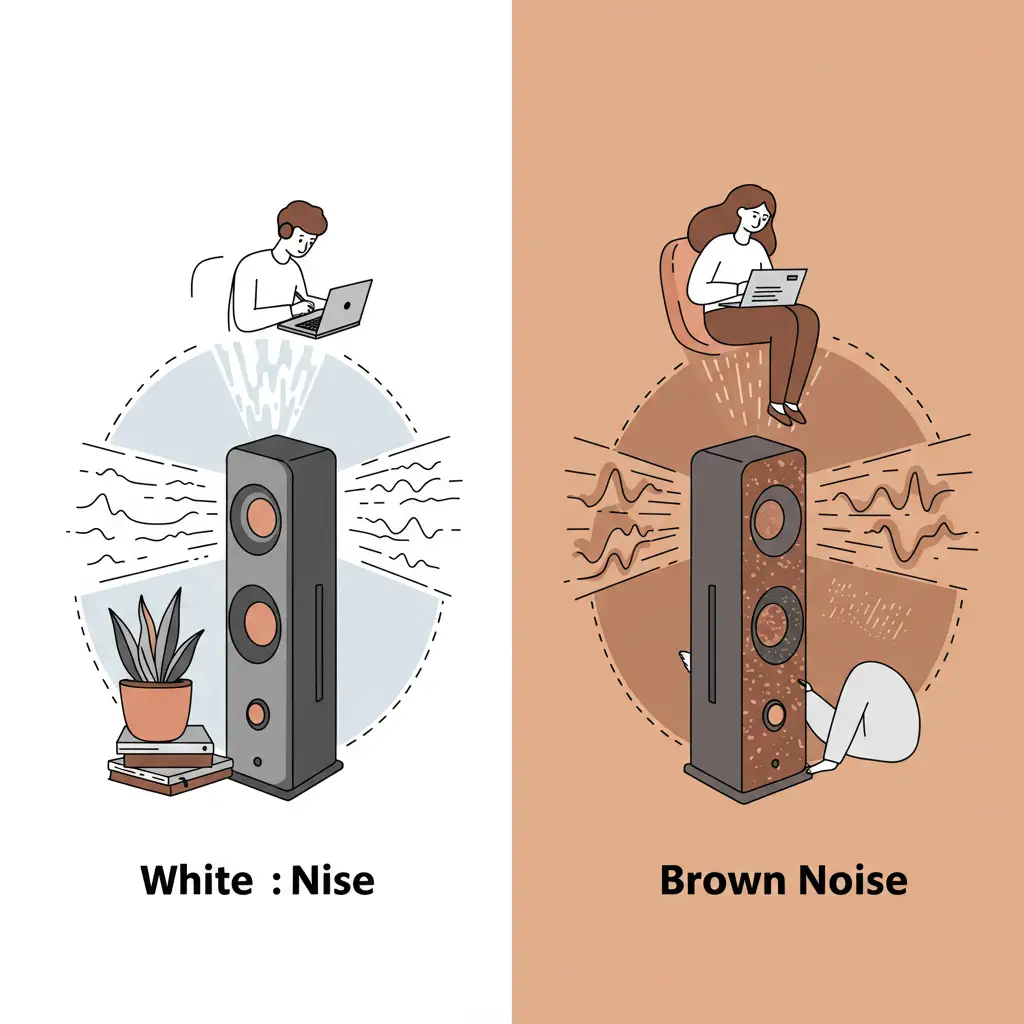
In a world filled with distractions, finding the perfect sound environment to concentrate can be a game-changer. White noise and brown noise are popular auditory tools used to mask distractions, enhance focus, and improve productivity. But how do these sounds work, and which is better for your study or work needs? Let’s dive in.
1. What Are White Noise and Brown Noise?
Both white noise and brown noise are types of ambient sound that consist of random audio frequencies, but they differ in how they distribute these frequencies.
White Noise
- Contains equal power across all frequencies audible to the human ear.
- Sounds like a steady hiss, similar to static on a television or radio.
- Examples: Fan sounds, air conditioners, or white noise machines.
Brown Noise
- Has a deeper, richer tone than white noise.
- Distributes more power at lower frequencies, creating a "darker" sound.
- Examples: Deep hums, the sound of waterfalls, or distant thunder.
2. Benefits of White and Brown Noise
Both types of noise have unique benefits depending on your needs:
White Noise
- Masking Distractions: Covers sudden noises like conversations, making it easier to focus in noisy environments.
- Promotes Sleep: The consistent hum can soothe the mind, making it useful for light sleepers or during study breaks.
- Focus Booster: Helps individuals with ADHD or those working in chaotic environments stay on task.
Brown Noise
- Deeper Relaxation: The lower frequencies are calming, reducing stress and tension.
- Enhanced Concentration: Ideal for tasks requiring sustained focus, like reading or writing.
- Sleep Aid: The deeper tones are often more soothing for individuals who find white noise too harsh.
3. How White and Brown Noise Enhance Focus and Productivity
Masking Background Noise
Both white and brown noise create a "sound blanket" that minimizes distractions. Whether it’s the chatter of coworkers or the buzz of city life, these noises help maintain a consistent auditory environment.
Inducing a Flow State
By providing a steady auditory input, these noises help your brain enter a flow state—a condition of heightened focus and productivity.
Reducing Stress
Brown noise, in particular, can create a soothing environment, helping to calm an overactive mind and improve mental clarity.
Supporting Creativity
The steady backdrop of white or brown noise can block out disruptive thoughts, allowing you to focus on creative or problem-solving tasks.
4. Choosing Between White and Brown Noise
The choice between white and brown noise often depends on personal preference and the type of activity:
- White Noise: Best for environments with frequent, sharp distractions. Ideal for light sleepers or individuals with ADHD.
- Brown Noise: Better for long periods of focused work or relaxation. Preferred by those who find white noise too sharp or high-pitched.
5. How to Incorporate White and Brown Noise
Playlists
- Explore white and brown noise playlists on platforms like Spotify, YouTube, or StudyBounce’s integrated focus tracks.
Pair with Study Techniques
- Combine noise with methods like the Pomodoro Technique to enhance productivity.
- Use it as a backdrop for deep work sessions or during light tasks like organizing notes.
Experiment with Timing
- Use white noise during chaotic work hours.
- Try brown noise during deep focus sessions or for winding down after a long day.
6. The Science Behind Noise and Focus
Research supports the use of ambient noise for cognitive enhancement:
- Improved Attention: A 2016 study found that white noise improved concentration in individuals with ADHD.
- Memory Boost: Ambient noise, such as brown noise, has been linked to better recall in learning tasks.
- Stress Reduction: Low-frequency sounds like brown noise can lower cortisol levels, reducing stress and improving performance.
Final Thoughts
White noise and brown noise are powerful tools for enhancing focus, reducing distractions, and creating a productive study or work environment. Whether you prefer the steady hum of white noise or the deeper tones of brown noise, integrating these sounds into your daily routine can help you achieve your goals more effectively.